



Adrenergic Receptor
Beta Receptor
Adrenergic receptors are a class of G protein-coupled receptors that are targets of the catecholamines, especially norepinephrine and epinephrine. Many cells possess these receptors, and the binding of a catecholamine to the receptor will generally stimulate the sympathetic nervous system. The sympathetic nervous system is responsible for the fight-or-flight response, which includes widening the pupils of the eye, mobilizing energy, and diverting blood flow from non-essential organs to skeletal muscle. There are two main groups of adrenergic receptors, α and β, with several subtypes. α receptors have the subtypes α1 and α2. β receptors have the subtypes β1, β2 and β3. All three are linked to Gs proteins, which in turn are linked to adenylate cyclase. Agonist binding thus causes a rise in the intracellular concentration of the second messenger cAMP. Downstream effectors of cAMP include cAMP-dependent protein kinase (PKA), which mediates some of the intracellular events following hormone binding.
Adrenergic Receptor Isoform Specific Products
All Product Categories
-
Adrenergic Receptor Inhibitors
(267)
View all products
-
Adrenergic Receptor Agonists
(503)
View all products
-
Adrenergic Receptor Antagonists
(552)
View all products
-
Adrenergic Receptor Activators
(45)
View all products
-
Adrenergic Receptor Modulators
(21)
View all products
-
Adrenergic Receptor Degraders
(2)
View all products
-
Adrenergic Receptor Controls
(8)
View all products
-
Adrenergic Receptor Substrates
(3)
View all products
-
Adrenergic Receptor Ligands
(17)
View all products
-
Adrenergic Receptor Related Products (1636)
Related Products (1636)

-
Antibodies (4)
-
Adrenergic Receptor Isoform Comparison
-
Edivoxetine
 0 ImagesCat. No.: HY-15413CAS No.: 1194508-25-2Synonyms: LY 2216684Edivoxetine (LY 2216684) is a potent and selective norepinephrine reuptake inhibitor. Edivoxetine can be used for the study of major depressive disorder (MDD) and attention-deficit/hyperactivity disorder (ADHD).
-
Nolomirole
 0 ImagesCat. No.: HY-106973CAS No.: 90060-42-7Synonyms: CHF 1035 free baseNolomirole (CHF 1035) is an orally active and selective DA2 dopaminergic receptor/α2-adrenoceptor agonist. Nolomirole attenuates the heart failure signs in the Monocrotaline (HY-N0750)-induced congestive heart failure model. Nolomirole increases cardiac output.
-
RWJ52353 hydrochloride
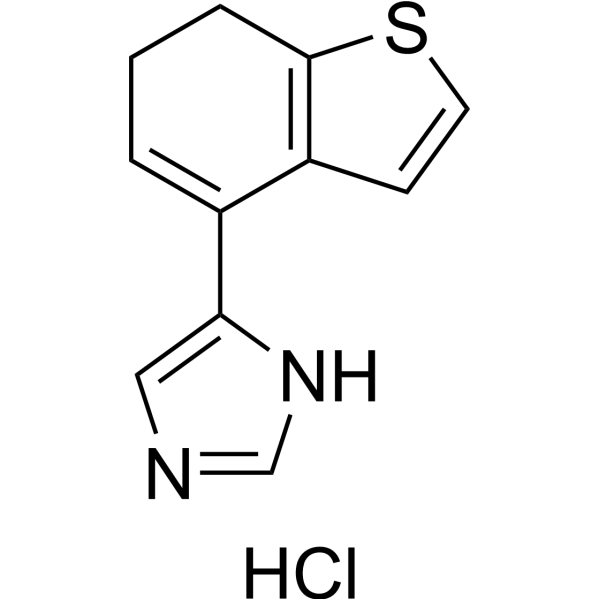 0 ImagesCat. No.: HY-103216ACAS No.: 245744-13-2RWJ-52353 hydrochloride is an orally potent, highly selective α2D adrenergic receptor agonist (Ki: 1.5 nM) with potential analgesic effects. RWJ-52353 hydrochloride demonstrated analgesic activity in abdominal tests in rats and mice, and improved agitation in mice in the hot plate test and tail flick test. RWJ-52353 hydrochloride also regulates the organic cation transporter (OCT) subtype, inhibiting rOCT1 and rOCT2 with IC50s of 100 μM and 20 μM respectively; it also activates rOCT3, affecting [3H]-1- in cells. Methyl-4-phenylpyridinium ([3H]MPP
-
Naftopidil dihydrochloride
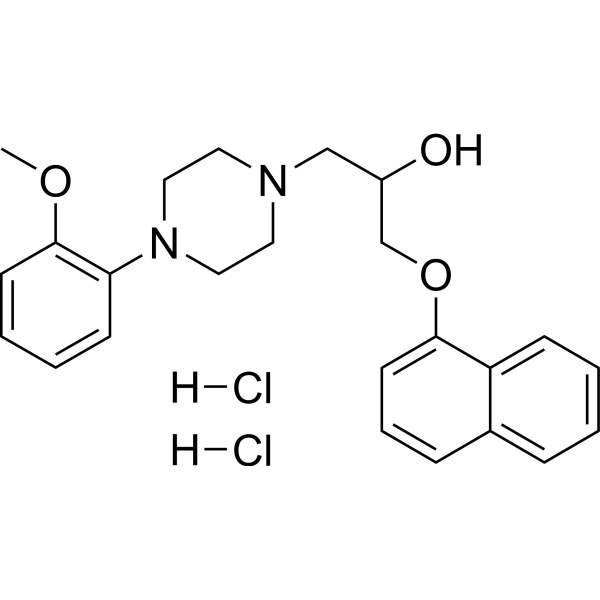 0 ImagesCat. No.: HY-B0391ACAS No.: 57149-08-3Synonyms: KT-611 dihydrochloride; BM-15275 dihydrochlorideNaftopidil dihydrochloride (KT-611 dihydrochloride) is a selective alpha1-adrenoceptor antagonist, with Kis of 3.7 nM, 20 nM and 1.2 nM for the cloned human α1a-, α1b- and α1d-adrenoceptor subtypes, respectively. Naftopidil dihydrochloride has antiproliferative effects. Naftopidil dihydrochloride can be used for the research of prostate hyperplasia.
-
β-AR antagonist 2
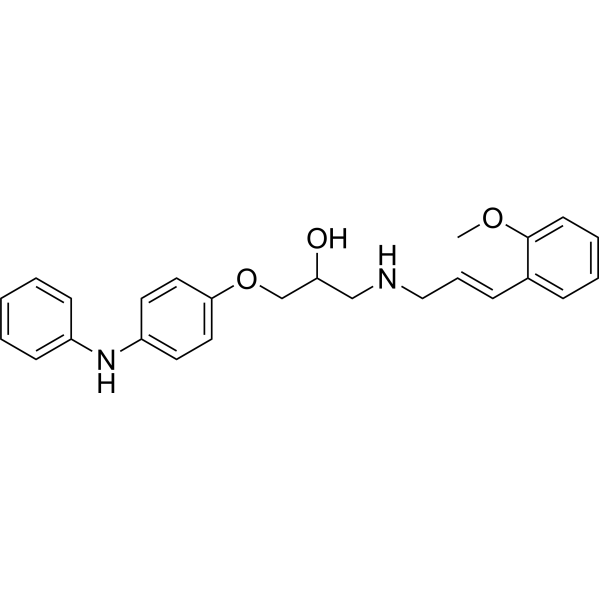 0 ImagesCat. No.: HY-163363CAS No.: 2779507-62-7β-AR antagonist 2 (compound 43) is an antagonist of β-AR (IC50: 0.17 μM). β-AR-IN-1 inhibits the growth of mouse A549 xenograft tumors and shows cardioprotective efficacy against DOX-induced HF in C57 mice.
-
Promethazine-d4
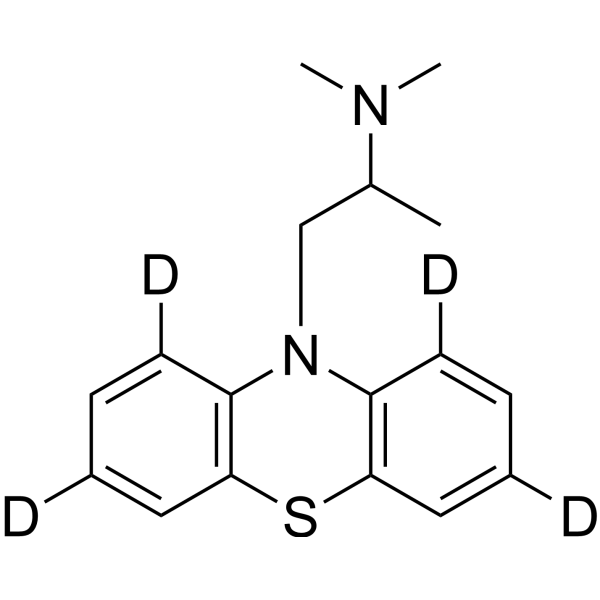 0 ImagesCat. No.: HY-B1296S1CAS No.: 1173147-64-2Synonyms: (±)-Promethazine-d4; N,N-dimethyl-1-phenothiazin-10-yl-propan-2-amine-d4
-
Flestolol sulfate
 0 ImagesCat. No.: HY-127128CAS No.: 88844-73-9Synonyms: ACC-9089 sulfateFlestolol (ACC-9089) sulfate is a competitive, ultra-short-acting beta-adrenergic blocking agent. Flestolol sulfate shows a half-life of approximately 6.5 minutes. Flestolol sulfate has the potential for the research of chest pain.
-
Proterguride
 0 ImagesCat. No.: HY-106465CAS No.: 77650-95-4Proterguride is a potent dopamine receptor agonist. Proterguride also shows antagonistic properties at the histamine H(1) receptor and alpha(1)-adrenoceptor and partially agonize serotonergic 5-HT2A/B receptor. Proterguride can be used for the research of neurological disease, such as Parkinson's disease .
-
D-Mannitol, M200 (GMP Like)
 0 ImagesCat. No.: HY-N0378AGLCAS No.: 69-65-8Synonyms: Mannitol, M200 (GMP Like); Mannite, M200 (GMP Like)D-Mannitol, M200 (GMP Like) (Mannitol, M200 (GMP Like)) is the GMP Like class D-Mannitol that can be used as pharmaceutical excipients. D-Mannitol (Mannitol) is an oral, resistant sugar widely used in the food and pharmaceutical industries to promote the absorption and retention of calcium and magnesium through cecal fermentation, while acting as a osmotic diuretic to reduce tissue edema. D-Mannitol can enhance brown fat formation, improve insulin effect, reduce blood sugar levels, And through the start the β3-adrenergic receptor (β3-AR), PGC1α and PKA induced by means of white fat cells into brown fat cells.
-
Nemazoline hydrochloride
 0 ImagesCat. No.: HY-106798CAS No.: 111073-18-8Synonyms: A-57219; SCH 40054Nemazoline hydrochloride (A-57219 hydrochloride) is selective α-adrenergic agent with α1-agonist/α2-antagonist activity, which is used as a nasal decongestant. Nemazoline hydrochloride produces decongestion by α1-mediated contraction of capacitance vessels, but not compromises blood flow by virtue of α2-antagonism. Nemazoline hydrochloride also blocks endogenous noradrenaline-mediated α 2-constriction of the resistance vessels.
-
2-(2-Methoxyphenoxy)ethylamine hydrochloride
 0 Images2-(2-Methoxyphenoxy)ethylamine hydrochloride (Compound 2b) is a mixed agonist/antagonist. 2-(2-Methoxyphenoxy)ethylamine hydrochloride is a5-HT1A receptor partial agonist and a α1-adrenergic receptor antagonist. 2-(2-Methoxyphenoxy)ethylamine hydrochloride can be used for neurological diseases research, such as anxiety, depression and psychosis.
-
Harmane-d2
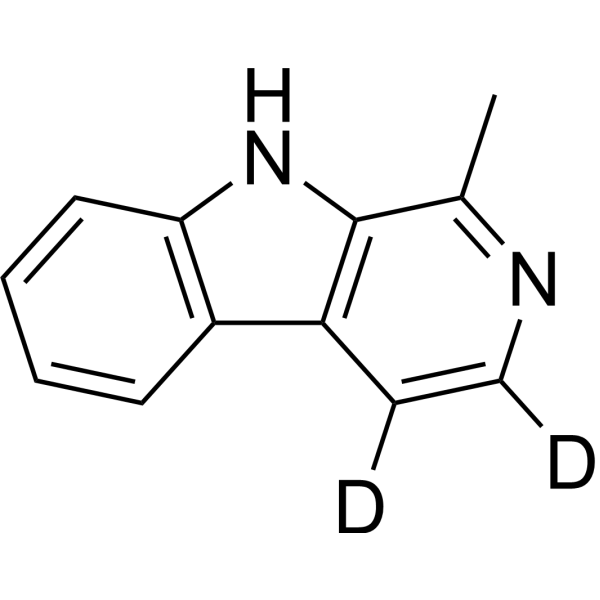 0 ImagesCat. No.: HY-101392S1Harmane-d2 is the deuterium labeled Harmane. Harmane, a β-Carboline alkaloid (BCA), is a potent neurotoxin that causes severe action tremors and psychiatric manifestations. Harmane shows 1000-fold selectivity for I1-Imidazoline receptor (IC50=30 nM) over α2-adrenoceptor (IC50=18 μM). Harmane is also a potent and selective inhibitor of monoamine oxidase (MAO) (IC50s=0.5 and 5 μM for human MAO A/B, respectively).
-
Rezatomidine
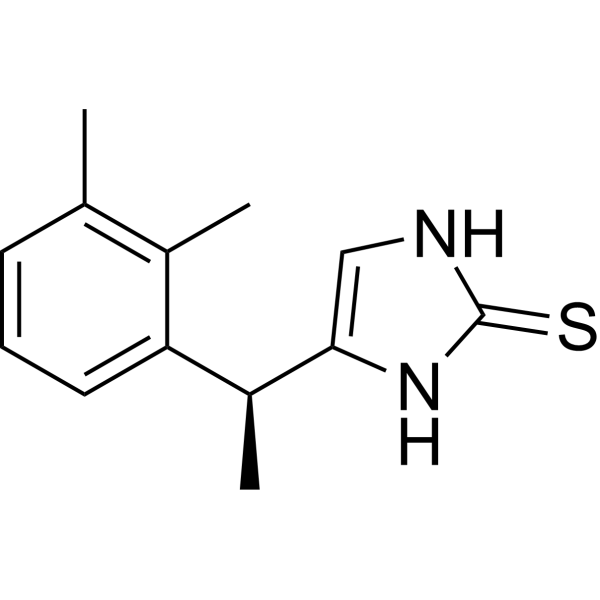 0 ImagesCat. No.: HY-14897CAS No.: 847829-38-3Synonyms: AGN-203818Rezatomidine (AGN-203818) is a potent and selective α2-AR agonist. Rezatomidine can be used for diabetic neuropathy and neuropathic pain research.
-
Lidamidine hydrochloride
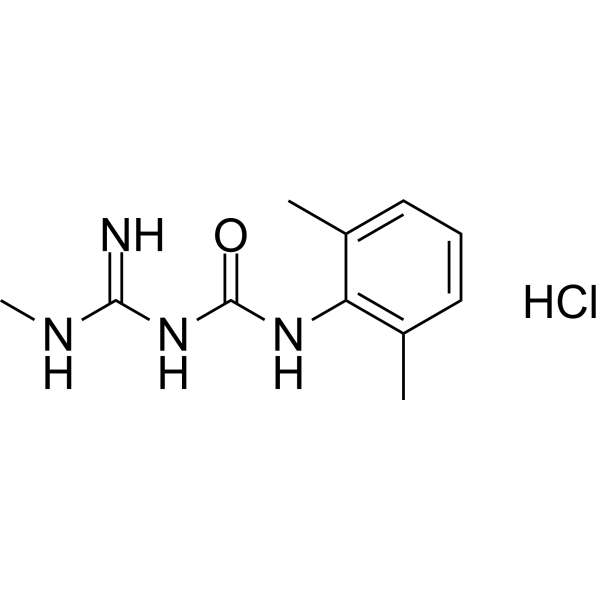 0 ImagesCat. No.: HY-107358ACAS No.: 65009-35-0Synonyms: WHR-1142ALidamidine hydrochloride (WHR-1142A) is an α2-adrenergic receptor agonist and antidiarrheal agent.

-
Dihydroergotamine-d3
 0 ImagesCat. No.: HY-B0670SDihydroergotamine-d3 is the d3-labeled Dihydroergotamine (HY-B0670). Dihydroergotamine (DFN-19) is a blood-brain barrier-permeable semi-synthetic ergot alkaloid, acting as a full agonist of 5-HT1B/1D receptors (Ki values of 0.3 nM and 2.5 nM, respectively; functional IC50 values of 2 nM and 2.2 nM, respectively). Dihydroergotamine inhibits Forskolin (HY-15371)-stimulated cAMP accumulation, possesses α-adrenergic receptor antagonistic activity and weak dopaminergic agonistic activity. It mediates intracranial cerebrovascular contraction, inhibits the release of neuropeptides such as CGRP/substance P, and suppresses neurogenic inflammation by activating 5-HT1B/1D receptors in the trigeminovascular system. Dihydroergotamine binds to the catalytic site of Trypanosoma cruzi trypanothione reductase and exhibits trypanocidal activity in vitro. Dihydroergotamine can be used in studies related to migraine and trypanosome infections.
-
Polygalatenoside A
 0 ImagesCat. No.: HY-N9628CAS No.: 946839-55-0Polygalatenoside A is a noradrenaline reuptake inhibitor with an IC50 of 30.0 μM against human noradrenaline transporter. Polygalatenoside A can be used in the research of mental disorders.
-
Agaridoxin
 0 ImagesCat. No.: HY-121578CAS No.: 58298-77-4Synonyms: GDHBAgaridoxin (GDHB) is a blocker of catecholamine and adrenergic alpha-type receptors isolated from mushrooms. Agaridoxin activates adenylyl cyclase in rat hypothalamic membrane granules in the presence of guanosyl imide diphosphate (Gpp(NH)p).
-
Alfuzosin-d7 hydrochloride
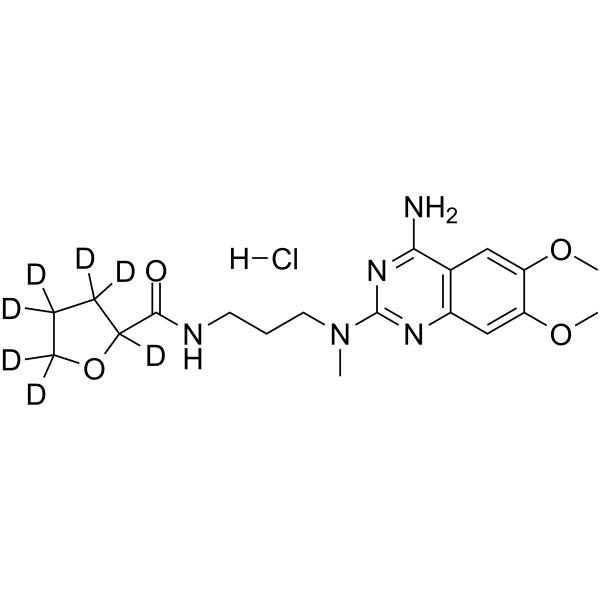 0 ImagesCat. No.: HY-B0192AS1CAS No.: 1276197-14-8Synonyms: SL 77499-10-d7Alfuzosin-d7 (hydrochloride) is the deuterium labeled Alfuzosin hydrochloride. Alfuzosin hydrochloride is an α1 adrenergic receptor antagonist used to treat benign prostatic hyperplasia (BPH).
-
R-(-)-Oxaprotiline
 0 ImagesCat. No.: HY-122300BCAS No.: 76496-68-9Synonyms: LevoprotilineR-(-)-Oxaprotiline (Levoprotiline) is an antidepressant with anticholinergic and sympathostimulatory activities. R-(-)-Oxaprotiline exhibits different abilities to block norepinephrine uptake and anticholinergic activity compared to its enantiomer C 49802 B-Ba. R-(-)-Oxaprotiline in human studies shows physiological effects consistent with those in animals. Administration of R-(-)-Oxaprotiline results in a modest increase in heart rate and arterial blood pressure. Salivation is inhibited with R-(-)-Oxaprotiline, consistent with its anticholinergic properties. R-(-)-Oxaprotiline has similar effects to the established antidepressant compound Levoprotiline and has a shorter onset of action.




